Tesla's new-generation Roadster is set to make its debut by the end of the year, ushering in the "1-second era" for production cars!
Tesla's chief designer, Franz von Holzhausen, stated that the development is nearly complete, reigniting global car enthusiasts' anticipation for the new-generation Roadster.
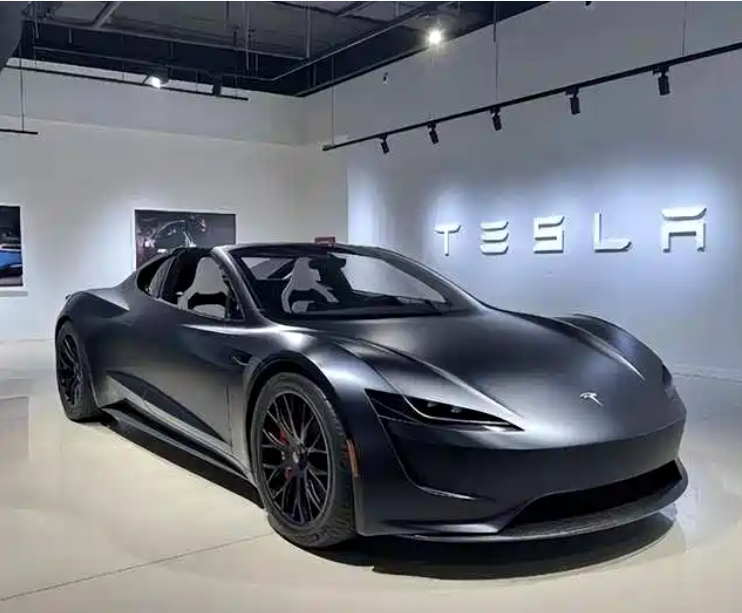
The new-generation Roadster is about to trigger a performance revolution. On October 20th, Tesla's chief designer, Franz von Holzhausen, officially confirmed that this electric supercar, hailed as the "fastest production car in history," will make its debut and conduct functional demonstrations before the end of this year.
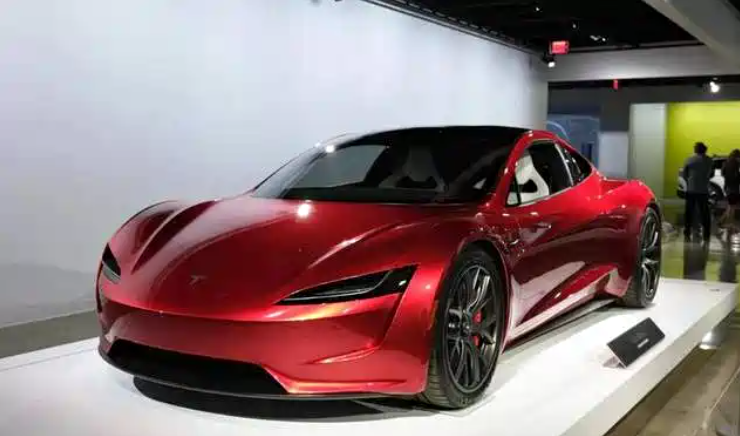
As Tesla's flagship performance model, the new-generation Roadster not only aims to disrupt the traditional supercar market but also showcases Tesla's absolute leadership in electric technology.
01 Official Announcement: Five Years of Waiting Are About to End
Since its first appearance in 2017, the production journey of the new-generation Roadster has been full of twists and turns. Originally planned for production in 2020, it was repeatedly postponed due to Tesla's focus on solving the Model 3 production bottleneck, the impact of the pandemic, and supply chain crises.
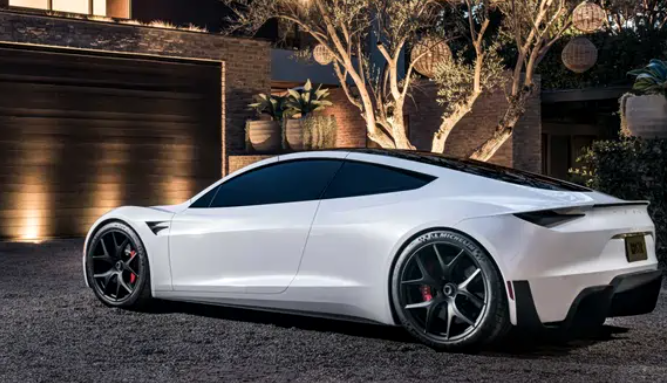
Now, after five years of waiting, the end is in sight.
Franz clearly stated in a podcast that the development of the new-generation Roadster is nearly complete and it will make its official debut and conduct functional demonstrations before the end of 2025. His statement, "The wait will be worth it," implies that this car will live up to expectations.
Tesla CEO Elon Musk has high hopes for this model, calling it "potentially the most exciting product ever."
He even boldly claimed, "There will never be another car like the new Roadster." Such high expectations and confidence undoubtedly whet the appetite of global car enthusiasts.
02 Performance Breakthrough: Redefining the Limits of "Fast"
The most astonishing aspect of the new-generation Roadster is its performance parameters that push the physical limits. Musk previously revealed that the model aims for a 0-100km/h acceleration time of less than 1 second.
What does this number mean?
In the traditional supercar realm, a 2.5-second 0-100km/h acceleration is already top-tier. The 2.7-second 0-100km/h of the Porsche 911 Turbo S pales in comparison to the Roadster.
Even the Bugatti Chiron takes 6.5 seconds to reach 0-200km/h, while the Roadster can do it in just 4.2 seconds.
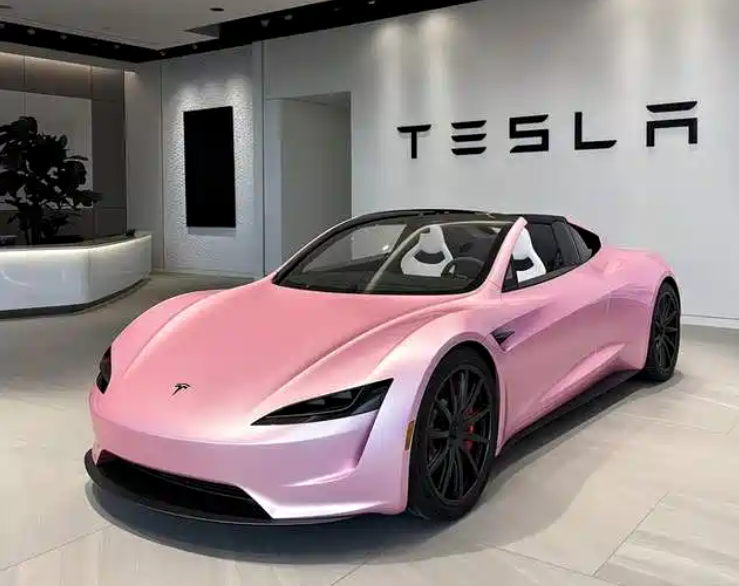
To achieve this goal, the new-generation Roadster will be equipped with a three-motor four-wheel drive system, with a combined peak torque output of up to 10,000N·m.
Such an astonishing torque output is beyond the reach of any internal combustion engine supercar. A Tesla engineer remarked, "This is no longer a car; it's a spacecraft on wheels."
03 Technological Revolution: Beyond Imagination
The new-generation Roadster represents a convergence of multiple technological breakthroughs.
In terms of battery technology, the new car will rely on Tesla's latest 4680 cell technology, increasing energy density by 50%. Combined with a high-energy-density battery pack, the WLTP range target is 992 kilometers.
This figure completely resolves the range anxiety of electric sports cars.
In terms of charging efficiency, the new-generation Roadster will support 900V high-voltage platform fast charging technology, significantly reducing charging time.
However, supply chain sources indicate that the current yield rate of the core battery module is still around 60%, which may pose a challenge for mass production.
Most notably, a special version of the production model may be launched with a propulsion module developed in collaboration with SpaceX. Although the specific technical details have not been disclosed yet, this cross-industry collaboration implies that Tesla may apply aerospace technology to the automotive field, setting a new precedent in technology.
04 Design Philosophy: Efficiency First
The design of the new-generation Roadster continues Tesla's "efficiency first" philosophy. As Tesla's chief designer, Franz von Holzhausen is well-versed in this approach. He once said, "I think good design should be beautiful, invisible, highly efficient, problem-solving, and the way it solves problems should be reassuring." In Franz's view, design should not be confined to fixed concepts but should pursue the best solutions. He revealed that the new-generation Roadster will offer "completely unique body paint options," with materials and processes specially calibrated to meet the customization needs of top-tier consumers. This dedication to efficiency is also reflected in the aerodynamic design. Every Tesla model must strike a balance between a beautiful appearance and low wind resistance to make the vehicle more efficient in operation, thereby achieving a greater driving range with less battery.
05 Market Positioning: Luxury Supercar
The market positioning of the new-generation Roadster is clear - to disrupt the traditional supercar market and set a new benchmark for electric supercars. The reservation deposit in the Chinese market has been set at 3.32 million yuan, and the base model is expected to cost approximately 14.138 million yuan. The Founder's Edition, limited to 1,000 units, has a full prepayment price of 250,000 US dollars (approximately 1.8 million yuan), with initial deliveries prioritizing North American market orders. Despite the high price, global consumer enthusiasm remains undiminished. It is reported that global reservations have exceeded 32,000 units. A supercar club in the Yangtze River Delta region of China even placed a collective order for 47 units, demonstrating the strong interest of high-end consumers in this vehicle. Tesla sales staff disclosed, "Customers who come to view the car don't ask about the configuration; they only ask if they can jump the queue for delivery."
In conclusion, the debut of the new-generation Roadster is not just the release of another electric supercar. It embodies Tesla's ambition to scale new heights in performance and represents another milestone in electric vehicle technology surpassing that of fuel-powered vehicles. While traditional supercar brands are still struggling to improve acceleration by fractions of a second, Tesla has brought mass-produced vehicles into the "1-second acceleration" era.


