The official image of Ferrari F76 has been released.
This is the first NFT digital model of Ferrari, and its name aims to pay tribute to the first victory of Ferrari in the Le Mans race 76 years ago. In 1949, Luigi Chinetti and Lord Selsdon drove a Ferrari 166 MM barchetta designed by Touring, winning the championship in the renowned French Le Mans 24-hour endurance race.
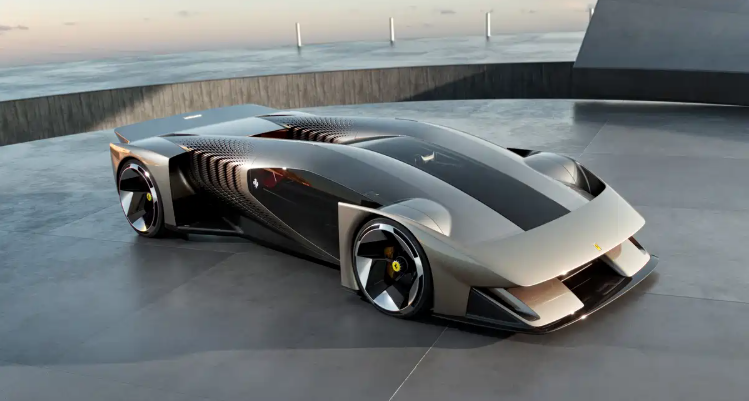
The Ferrari F76 is not a production model but a pioneering virtual project. It combines Ferrari's racing heritage with cutting-edge generative design and digital technology, opening up a new dimension of brand experience. Ferrari F76 is an exclusive digital asset created for the Hyperclub project, which aims to support the Le Mans and World Endurance Championship journey of the Ferrari 499P racing car. Customers joining the Hyperclub project can follow the official team and deeply experience the Ferrari racing journey.
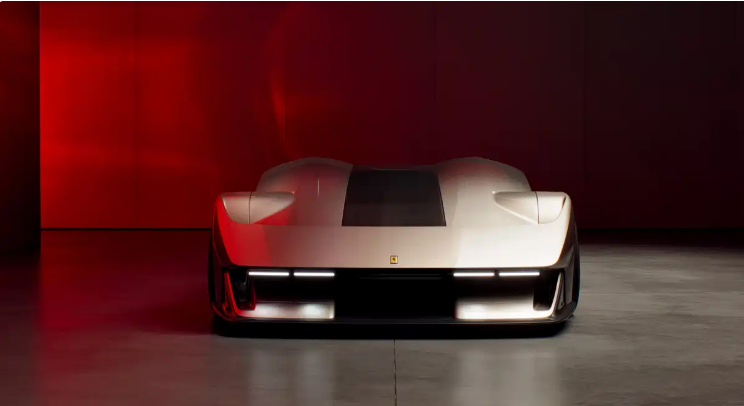
The Ferrari F76 was crafted by the Ferrari Design Center led by Flavio Manzoni, showcasing the future design language of Ferrari sports cars. This highly forward-looking project aims to perfectly integrate styling design, functional requirements, and outstanding performance through parametric design, reshaping the boundaries of car design. The Ferrari F76 project deeply integrates four major fields: biomimicry, architecture, engineering, and computer science, pioneering a number of innovative solutions. It is not just a simple styling exploration, but also gives birth to a series of patented technologies, opening up a new landscape in the field of automotive design.
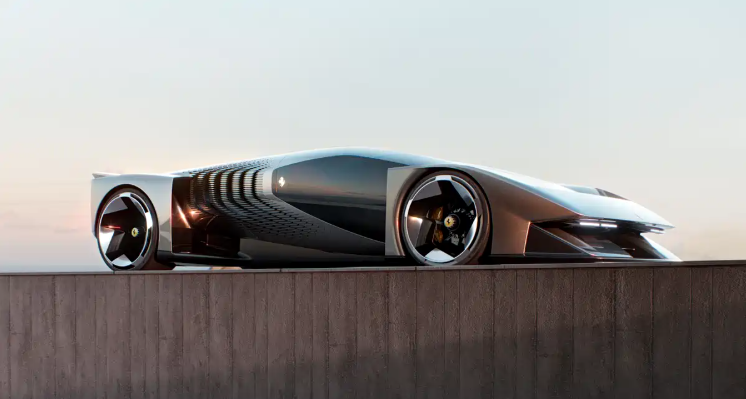
The double-body design of the Ferrari F76 constitutes its visual focus, highlighting Ferrari's ultimate pursuit of airflow management. The wing-shaped design and the application of exquisite geometric elements not only enhance the vehicle's performance but also break the traditional design framework. The cockpit and passenger cabin adopt a separated layout, and the cabin layout precisely corresponds to the body's wheelbase, thereby creating a new airflow interaction between the vehicle's bottom and structure. The central passage design transforms the entire vehicle into a wing surface, maximizing the ground effect. The airflow separates at the front of the vehicle and converges at the rear, while the second wing surface above the dual tail wings further enhances the efficiency of the diffuser.
The side wings of the car body adopt the vertical cut design from Ferrari F80, fully anticipating the technical aesthetic design of the new Ferrari super sports car, which will have a profound impact on future production models. Specifically, its design essence lies in the sharp contrast between the tense and technological lines of the wing surface and the sculptural body shape, and through mathematical optimization using generative algorithms, further enhancing the aesthetic expressiveness.
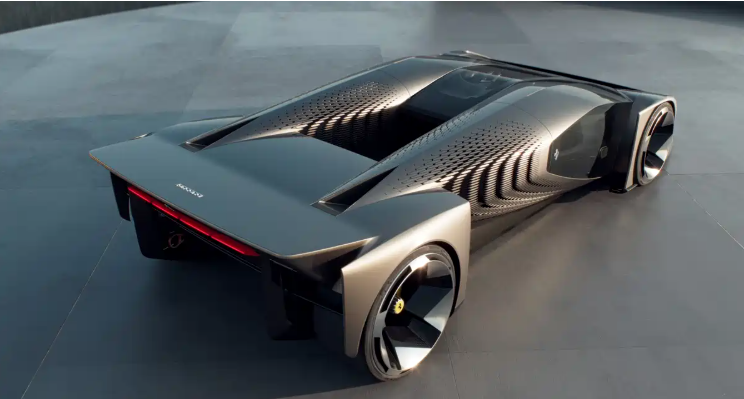
In the middle of the body, the three-dimensional painted design with side ventilation openings is particularly eye-catching, this highly recognizable design element vividly demonstrates Ferrari's signature design language. The rear uses topology optimization technology to directly integrate the heat management function into the vehicle structure, resulting in a complex geometric shape that can effectively guide the cooling airflow, thereby maximizing the heat dissipation efficiency of internal mechanical components.
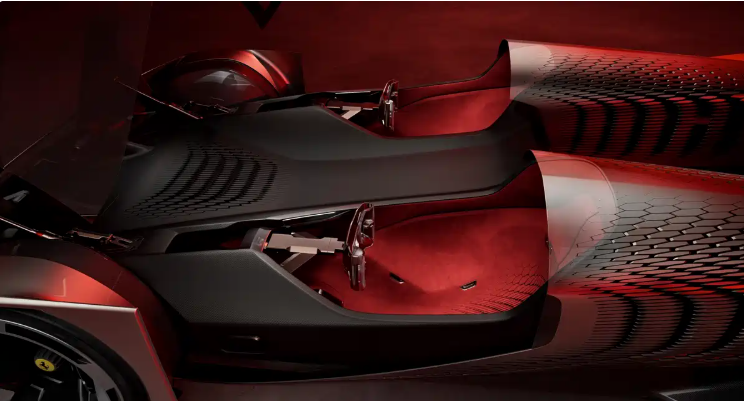
The structural design of the Ferrari F76 also achieved a new breakthrough. The car adopts a forward-looking structural layout, completely redefining the cabin space and appearance, and integrating traditional functional requirements with the innovative geometric form created using generative technology.
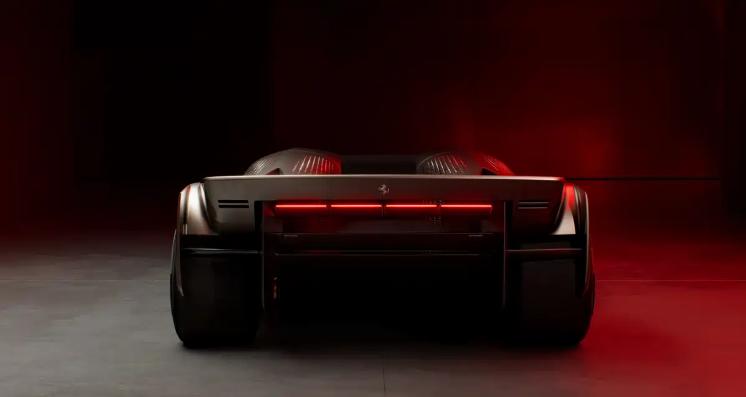
The rear part is defined by two vertical sections, outlining a wide wheelbase, and the upper wing surface, like a roof beam, strengthens the visual impact of the central passage, opening a "concept door" to explore a new design language. The four distinctive rear lights are perfectly integrated with the wing surface, not only presenting a unified visual beauty but also helping to optimize the performance of the entire vehicle.
The suspended strip across the front wing undoubtedly is the highlight of the front design. It draws on the iconic suspended diffuser concept of Ferrari F80 and elaborates on it to the extreme. Below the strip, the double-body structure converges downward to the diffuser, forming two slopes, highlighting the entrance of the central passage and the horizontal duct above the wheels. The two sets of retractable headlights are ingeniously placed below the suspended strip, with a design that combines inheritance and innovation, paying tribute to the pop-up headlights used by Ferrari in the 1970s and 1980s, and embodying the futuristic style of Ferrari F76, giving the entire vehicle a distinctive and unique personality.
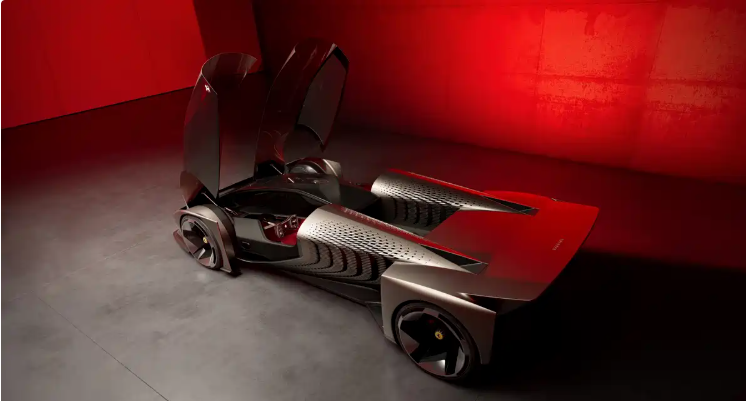
The interior design aims to enhance the shared driving experience for two passengers: Through the line control driving technology, the two independent driver cabins can achieve precise synchronization of all driving control components from the steering wheel to the pedals. The driver and passengers can perceive and share the control feedback in real time, thereby simultaneously enhancing the emotional resonance and technical interaction in the driving experience.
The Ferrari F76 project offers customers of the Marquis an unprecedented personalized customization experience. In the Hyperclub project over the past three years, each digital vehicle was created by customers through the exclusive design options released in stages. Thanks to this platform, customers not only can customize their own Ferrari F76, but also integrate into an exclusive community with passion as the bond, blending tradition and innovation.


